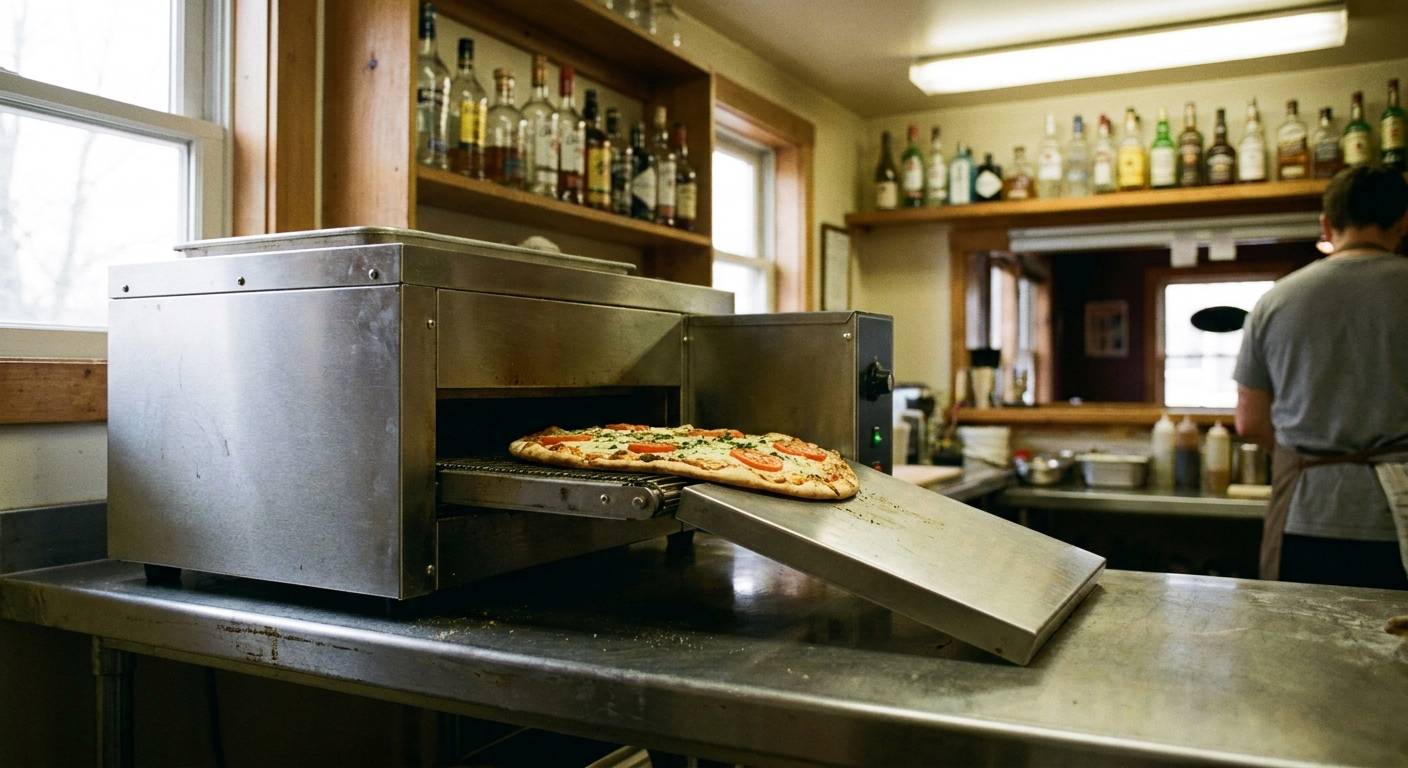
Countertop conveyors
Countertop models handle one to three pizzas at a time, depending on the model. Some compact units run on single-phase power, and a few are listed as ventless.
Steady Belt. Even Bake. Built for the Rush.
Commercial conveyor pizza ovens for pizza chains, delivery and takeout kitchens, school kitchens, and sandwich shops. Load at one end and box at the other — the set-and-forget design that delivery pizza chains helped popularize.
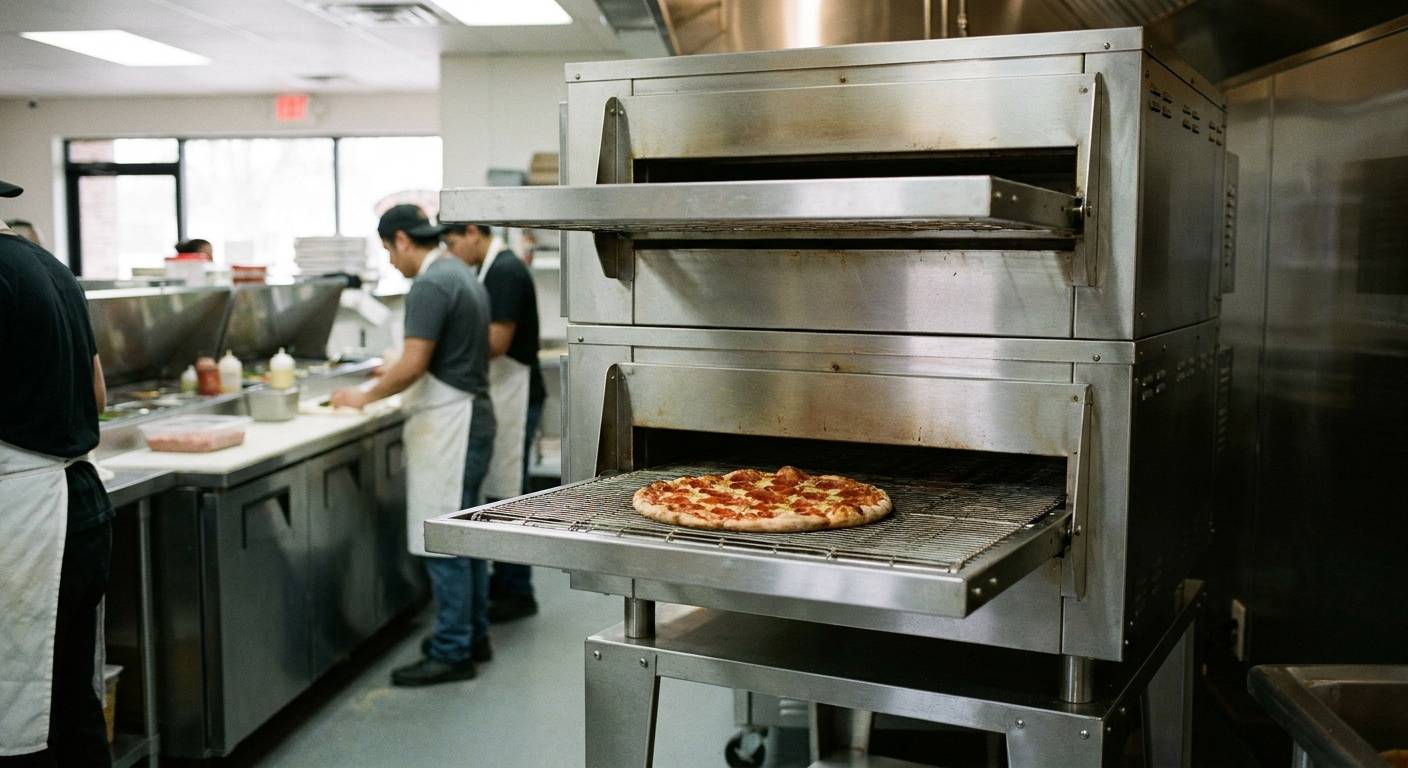
A conveyor oven carries food on a moving belt into and through a heated chamber. Raw pizza goes in at one end and comes out baked at the other. Gas and electric versions are made in both countertop and floor models.
Load
Raw pizza goes in at one end.
Bake chamber
Impingement fingers above and below the belt aim hot air at the food. Belt speed sets how long it stays in the chamber; temperature sets how much heat it receives.
Box
It comes out baked at the other end, ready to box.
Belt speed sets how long the food stays in the chamber, and temperature sets how much heat it receives. Manufacturers point to belt speed as the way to adjust doneness.
The trade press describes the daily routine as “set it and forget it”: turn the oven on in the morning, load and unload as needed, and turn it off at night.
One trade guide says older conveyors took 7 to 10 minutes to bake, while newer airflow designs cook in 3 to 5 minutes. Treat those as general ranges, not specifications for any one oven.
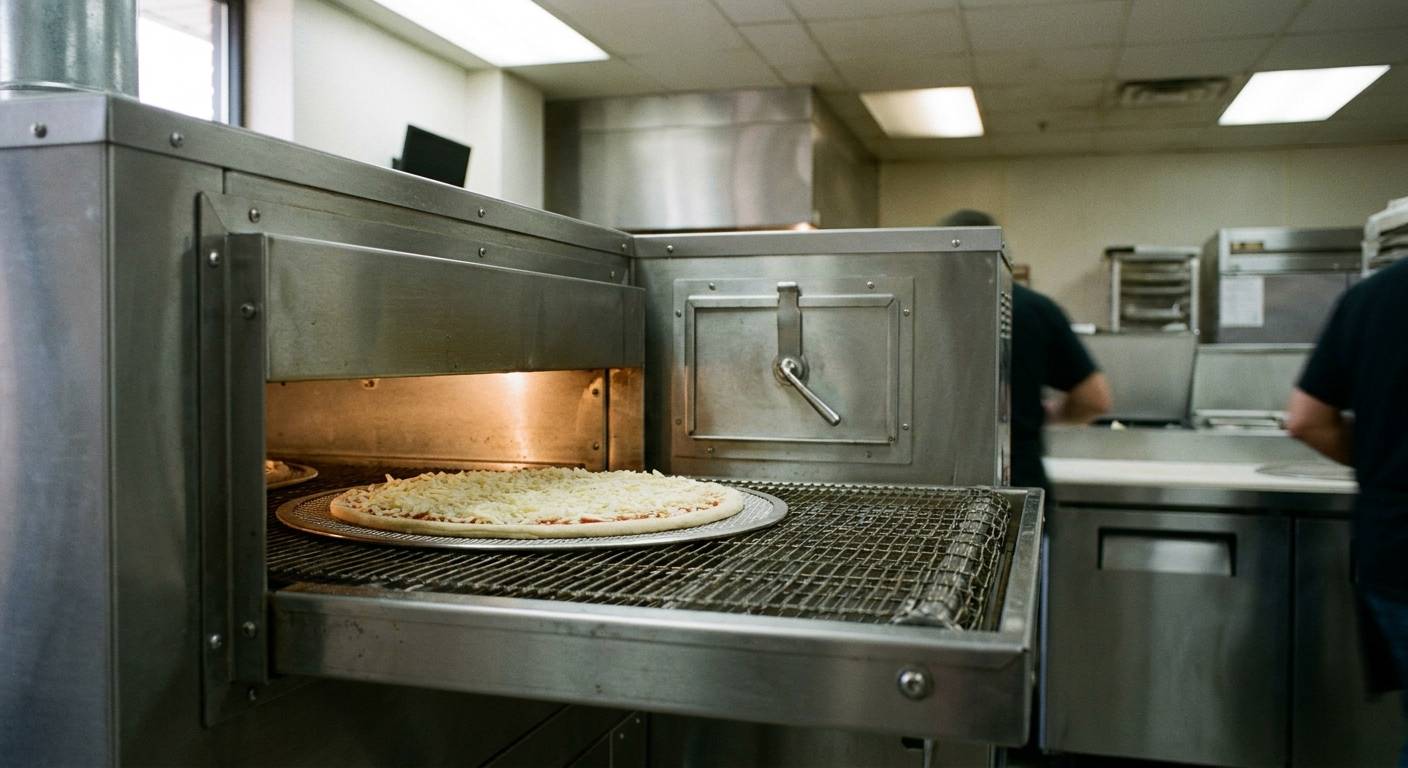
Conveyor ovens range from compact countertop units to full-size floor models stacked on one stand. Models are sized mainly by belt width and chamber length.
Countertop models handle one to three pizzas at a time, depending on the model. Some compact units run on single-phase power, and a few are listed as ventless.
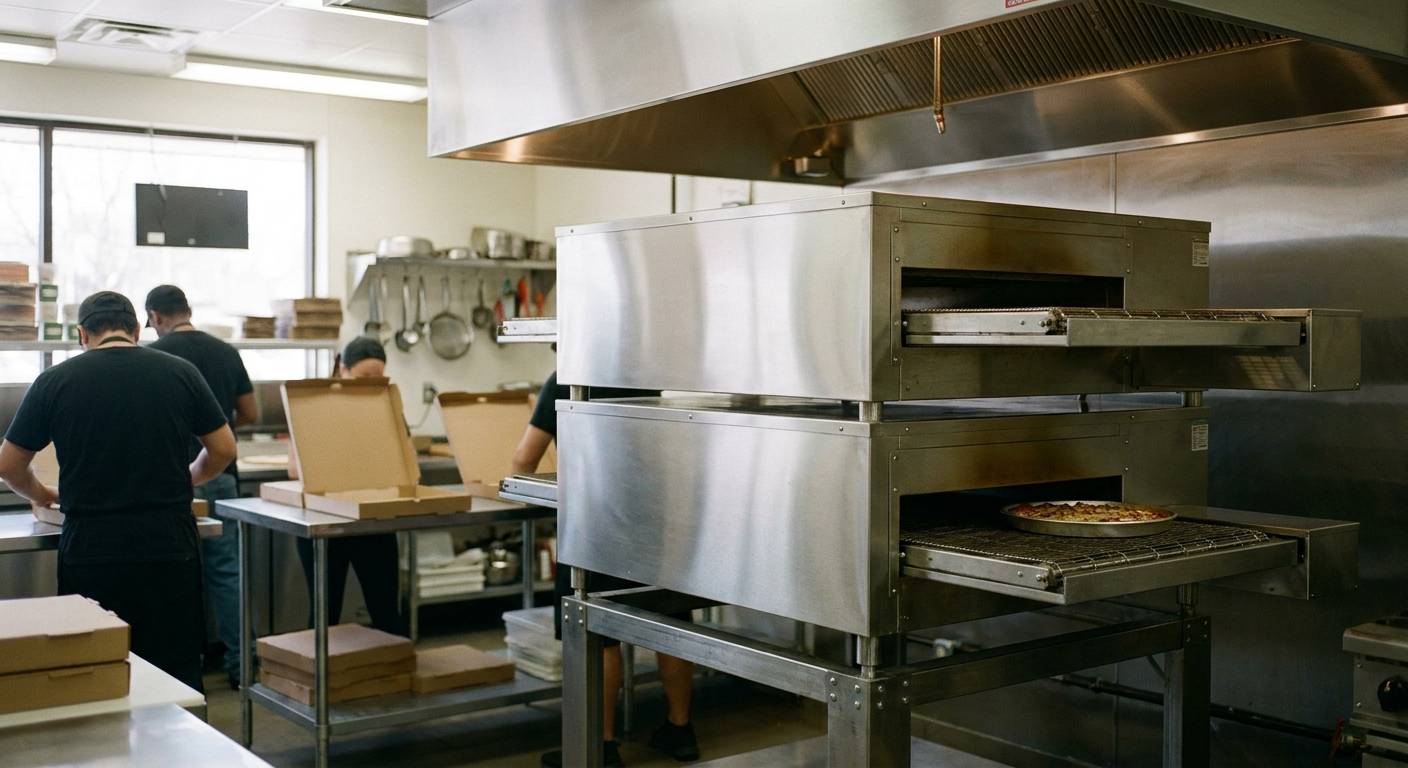
Full-size floor models run wider belts through longer chambers. Depending on the manufacturer they stack two or three high, and stacking increases capacity.
Typical ranges from a trade product guide. Individual models fall outside these tiers, so check the manufacturer's spec sheet.
| Size tier | Belt width | Chamber length |
|---|---|---|
| Small / countertop | 16 to 20 in. | 16 to 28 in. |
| Medium | 18 to 26 in. | 20 to 36 in. |
| Large | 24 to 32 in. | 36 to 40 in. |
| Extra-large | 32 to 38 in. | 55 to 70 in. |
Conveyors grew up in delivery pizza, but the same belt-and-chamber design bakes, toasts and heats a long list of other menu items.
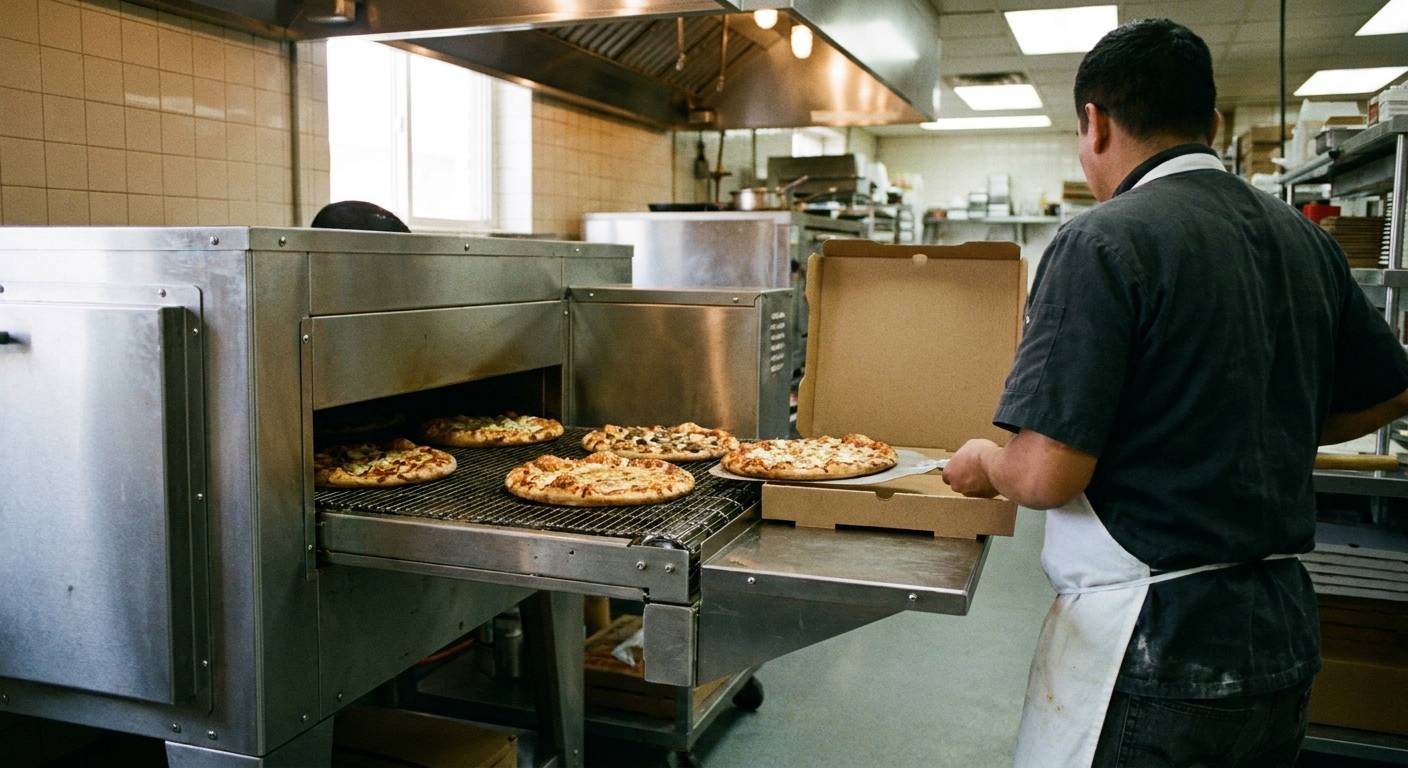
Skip the very fatty items. Conveyor ovens are not designed to handle large amounts of grease, so keep high-fat foods off the belt.
Most installation questions come down to the hood, the clearances, and the gas or electrical service. Sources do not always agree, and your local authority having jurisdiction has the final word.
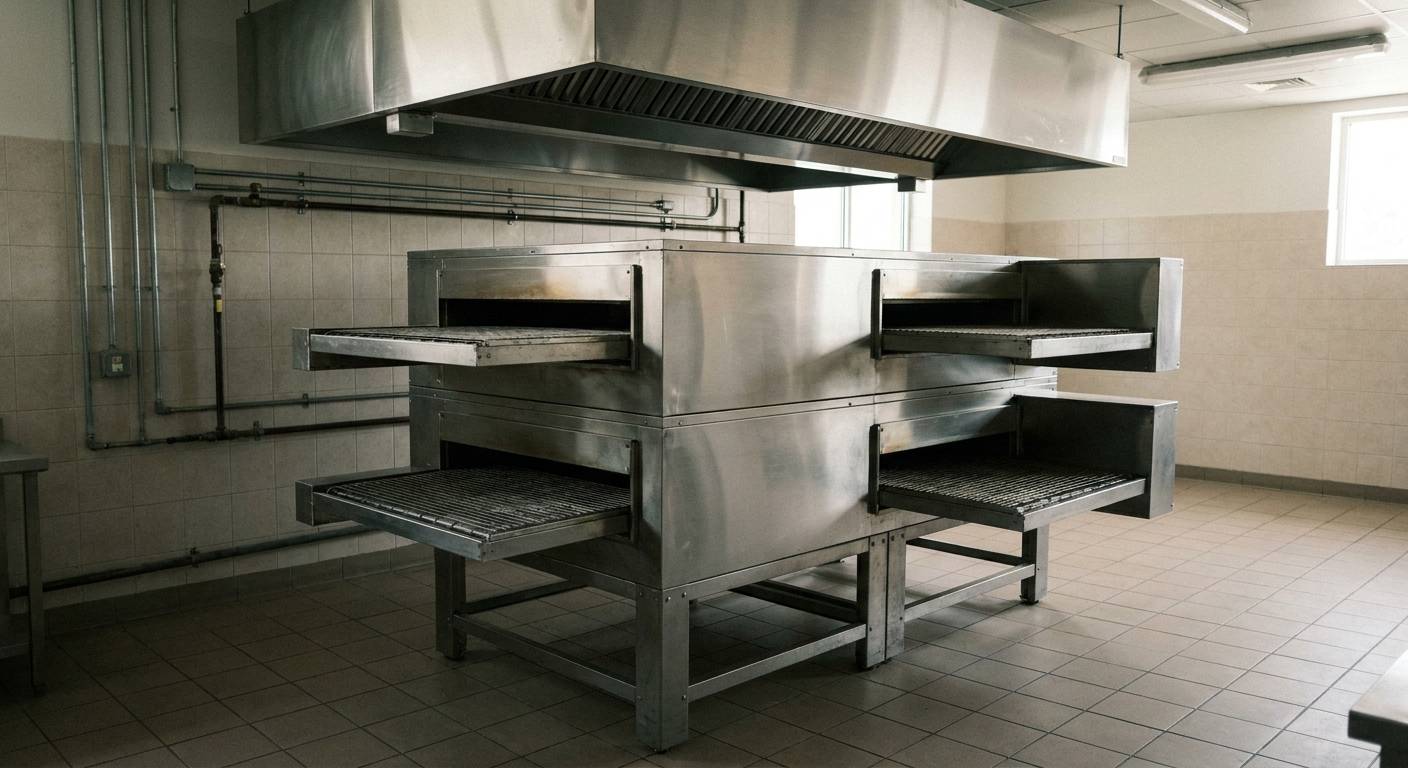
Check with your AHJ first. The authority having jurisdiction decides the hood type, clearances and fire-protection requirements for your kitchen. Confirm before you order.
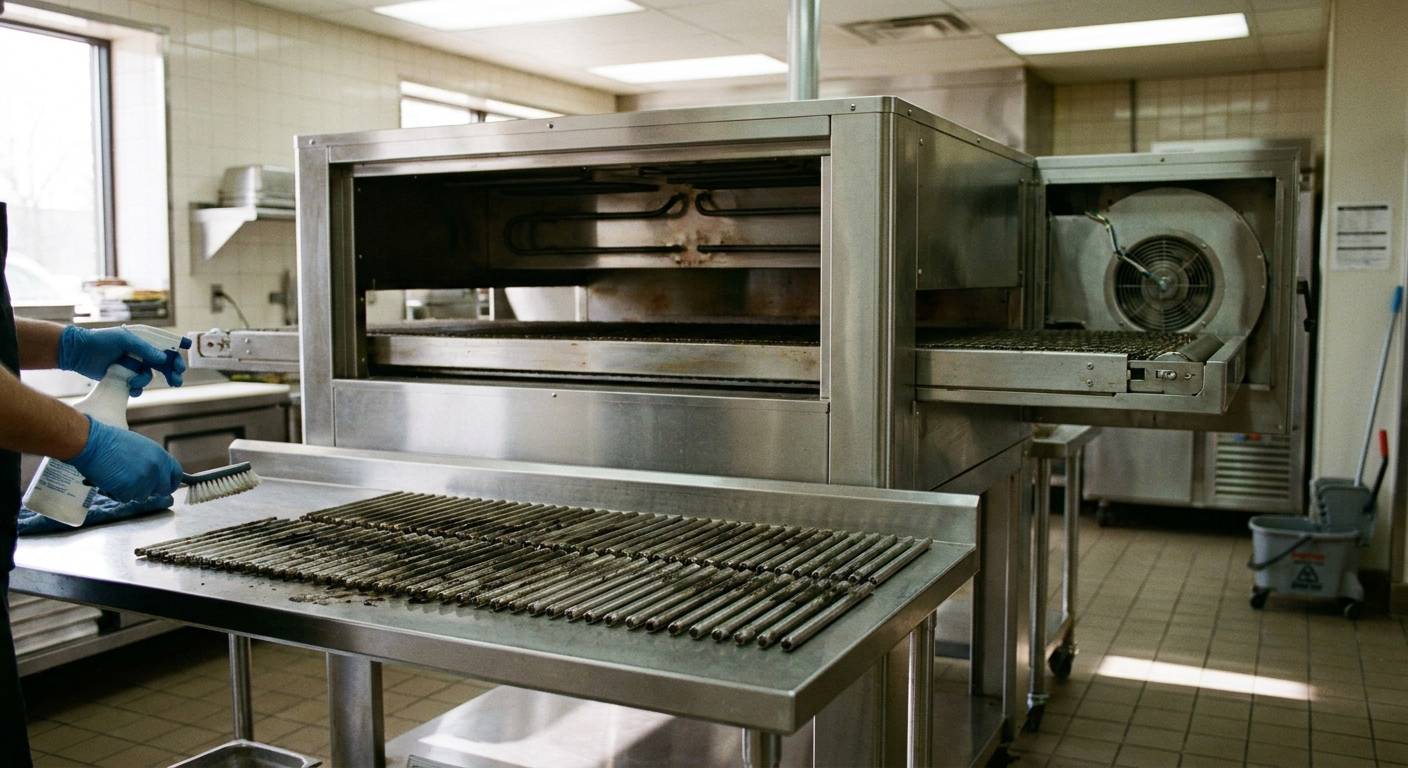
Routine cleaning covers the belt, crumb trays, impingement fingers and air vents on a daily, weekly and monthly rhythm. Your owner's manual governs.
Match the oven to your busiest hour, your largest pizza, and the utilities and hood your space can support.
Conveyors were developed because deck ovens could not keep pace in busy kitchens. Here is how one trade guide describes the difference.
| Attribute | Conveyor oven | Deck oven |
|---|---|---|
| How it bakes | A moving belt carries the pizza through a heated chamber using air impingement, infrared, or both. | The pizza bakes on a stone deck. |
| Bake time (trade-guide ranges) | Newer airflow designs: about 3 to 5 minutes. Older conveyors: 7 to 10 minutes. | 16 to 18 minutes per pie. |
| At peak | Continuous loading. Conveyors were developed to speed production. | Could not keep up at peak, in the same guide's account. |
Several manufacturers build commercial conveyor ovens. The lines below are listed alphabetically for reference.
Listed alphabetically. This is not a ranking or an endorsement, and model availability changes. Confirm current models and specifications with the manufacturer or an authorized dealer. Names belong to their respective owners.
Information only. The guidance on this page is general and educational. It is not installation, gas, electrical, ventilation or fire-safety advice and does not replace the manufacturer's instructions, your local codes, the authority having jurisdiction, or a licensed installer. Verify all information before relying on it. Read the full disclaimer.
A conveyor pizza oven uses a moving belt to carry food into and through a heated chamber. The heat comes from air impingement, infrared elements, or a combination of the two, and the oven is available in gas and electric versions in both countertop and floor models.
Two settings do the work. Belt speed sets how long the food spends in the chamber, and temperature sets how much heat it receives. Manufacturers point to belt speed as the way to adjust doneness.
Output varies by model and size. Retailer listings put smaller conveyor models at a few dozen 12-inch pizzas an hour and the largest extra-wide models at around 200. Check the rated output for the specific model and pizza size you plan to run.
Choose a belt wider than your largest pizza. Small countertop belts are sized for 12-inch pies, some compact models take up to a 16-inch pizza, and a trade product guide places large floor models at roughly 24 to 32 inch belts and extra-large models at 32 to 38 inches.
Yes. Depending on the manufacturer, conveyor ovens stack two or three high, and some triple-stacked units are sold as a single configuration. Stacking increases capacity; plan the stand or stacking option the manufacturer specifies for your configuration.
Most sources treat conveyor ovens as hooded equipment but disagree on the hood type. One state code handout lists gas and electric conveyor pizza ovens under rules requiring a Type I or Type II hood, while at least one manufacturer says a Type II hood may suffice for light-duty product loads. The local authority having jurisdiction makes the final call, so confirm with them before you buy.
Some compact countertop models are listed as ventless. Listings do not always say whether that holds in every installation, and other compact conveyors note that a hood may be required in some installations. Confirm with the manufacturer and your local authority having jurisdiction.
Many full-size electric conveyor ovens need three-phase power at high amperage. Some compact countertop units run on 208/240 V single-phase. Gas models still need an electrical connection, often a standard 120 V single-phase circuit. Use the current spec sheet for the exact model and have a licensed electrician confirm your service.
Let the oven cool first. Daily, empty the crumb trays, brush the belt and wipe the interior and exterior. Weekly, soak and scrub the belt, crumb trays and impingement fingers in hot water with a degreaser. Follow your manual on brushes and cleaners: some call for a wire brush on the belt, while others warn against steel wool or wire brushes on stainless surfaces and against caustic cleaners.
Trade sources describe conveyors as inefficient because heat can escape at both ends of the chamber. Newer designs, standby modes and modulating gas valves on larger units have improved this. ENERGY STAR's current commercial oven specification covers convection and combination ovens, so check energystar.gov for the latest status on conveyors.
Yes. Kitchens use them for sandwiches, burritos, nachos, quesadillas, Italian dishes such as spaghetti, par-baked pizza crusts, hamburger patties, grilled cheese, seafood, fries, cookies and brownies, and countertop models toast bread, buns, rolls and bagels. Avoid very fatty items, because conveyor ovens are not designed to handle large amounts of grease.
It can be. Used units are sold, including remanufactured ones. Warranty coverage and parts availability vary by brand and by seller, so confirm both, along with the oven's fuel type and electrical requirements, before you commit.
Speed and simplicity at peak. In one trade guide's account, deck ovens took 16 to 18 minutes per pie and could not keep up during rushes, and conveyors were developed to speed production. Delivery-based pizza chains helped drive their adoption.
Tell us about your kitchen, the fuel and power you have, and the volume you need at peak. Your request goes to suppliers who can quote it.